
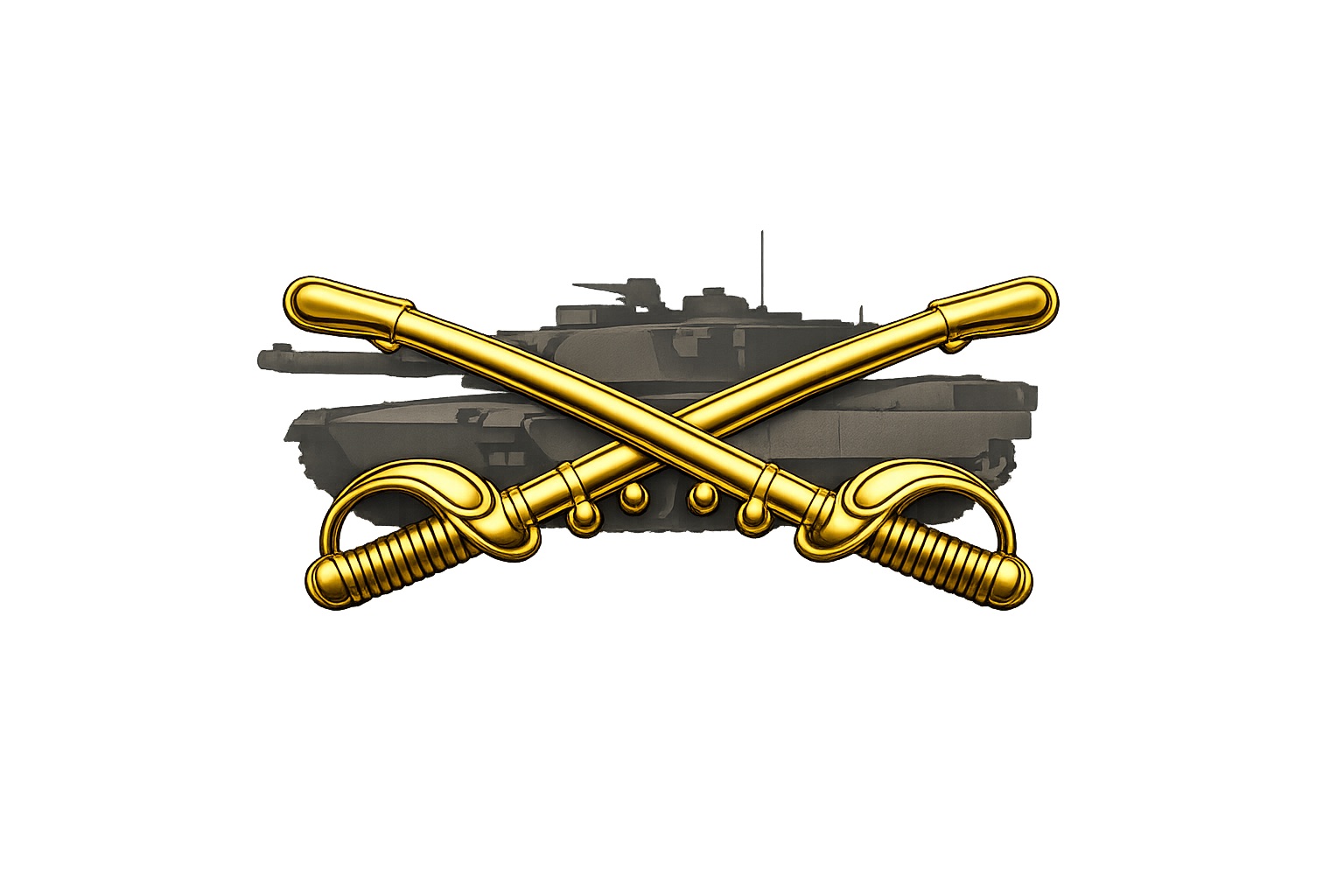
72 Tons of Purpose: William’s Story, in His Own Words
Fire Line: Real Stories of Service
Some stories arrive polished. William’s doesn’t — and that’s exactly why it matters.
William is an Army tanker who speaks the way many of us spoke in uniform: direct, unfiltered, and honest. That includes strong language at times. Nothing here has been added or dramatized. This is simply his natural voice. As a former Navy corpsman, I recognize that tone — different branches, different jobs, same truth.
When we talk about the things that shaped us, we don’t dress them up. We say them the way they come out. Fire Line exists to honor real stories of service, not softened versions. If strong language isn’t for you, I understand. But if you stay with us, you’ll hear a career tanker share his life with humor, grit, and heart.
This is William — in his own words.
“It’s like I excelled in combat.”
When I asked William when he first felt this is who I am, he didn’t hesitate.
“My first week in Iraq.”
He laughs when he says it, but it’s not bravado. It’s recognition — the moment a kid who grew up restless, hyperactive, and always in trouble realized that the chaos of combat didn’t rattle him. It clarified him.
“In garrison I’d go eight, nine months with nothing wrong, then boom — counseling statements. Being late, mouthing off, whatever. But in combat? I had no fear. People listened to me.”
His best friend’s mother, an ordained minister, once asked if he played Army as a kid. He told her, “Nobody plays Navy as a kid.” She told him maybe he was simply meant for this life.
He didn’t disagree.
Leaving Pendleton, Finding the World
William enlisted to escape the gravity of a small town and a painful chapter of young adulthood.
“Pendleton’s one of those towns — if you don’t leave right after high school, you live there forever. I knew there was more in the world.”
He found it in the Army. And he stayed for more than twenty years.
Life Inside 72 Tons of Steel
Driving a tank — or, as he puts it, “72 tons of pure murder” — is both the greatest and hardest job he ever had.
“You feel invincible in there. Nothing can stop it except our own ammunition. But the driver’s seat? Uncomfortable as hell. You come to a stop and it’s everything you can do to stay awake. People jabbing you in the head through the turret to wake you up.”
But the tank wasn’t just a machine. It was a family.
“It’s not just about you. It’s the four people in your crew. You’d take a bullet for them. A platoon is close — but a crew? That’s blood.”
He still keeps in touch with almost all of his first crew from Iraq. One of them, a young soldier he once had to discharge for mental health reasons, still shows up every time William comes home.
“It’s like I saved his life. Now he’s like a little lost puppy. I can’t get rid of him.”
He says it with affection.
The First IED
William’s second deployment introduced him to something his first hadn’t: IEDs.
“They told me about them. Warned me. But until you hit one, you don’t get it.”
His first day out, he was tank commander in a Humvee with a young lieutenant riding shotgun. The blast hit hard.
“It’ll make your butthole pucker,” he says, deadpan.
The lieutenant panicked. William didn’t.
“I’d been there before. I stayed calm, called up our grid, kept us moving. That was another moment I thought, damn… maybe I’m made for this.”
Brotherhood, Bullshit, and the People You Never Forget
William talks about his platoon the way people talk about siblings — relentless teasing, fierce loyalty.
“We’d pick on each other nonstop. But nobody outside the platoon could pick on us. They’d get jumped by fifteen guys.”
The person he’ll never forget is Sergeant Burke — a master gunner, a fisherman, a mentor, and a man whose wife once babysat William’s kids for free during his divorce.
“He talked big, told nasty stories, but he was a good man. Even if I get Alzheimer’s, I won’t forget him.”
Leadership, Good and Bad
Like most career service members, William had his share of great leaders — and a few he’d happily never see again.
“There’s a tactful way to tell someone to go screw themselves without saying the words. I mastered that.”
Coming Home, and the Hardest Part
Coming home from deployment wasn’t the hard part. Retiring was.
“Lack of respect and discipline out here. I look at people who haven’t served as complete morons sometimes. They have no clue. I don’t people very well.”
He says it with a laugh, but the frustration is real.
What He Wishes Civilians Understood
“We’re the kings of FAFO. Just because we’re calm now doesn’t mean we forgot how to be violent.”
He wishes people understood that service members aren’t stereotypes — not broken, not dangerous, not uneducated.
“I got a master’s degree. I got accepted to Notre Dame in basic training. People join for all kinds of reasons. For some of us, it’s what we were meant to do.”
Finding Peace, and Choosing Life
William has seen too many soldiers lose themselves after service — to alcohol, to despair, to suicide.
“I wish they’d stop confusing being content with being happy. I found my peace. I found my happiness. And then I found a girlfriend.”
He answers the phone at 2 a.m. for anyone who needs him. He means it.
“It’s just not worth it. Call me. I’ll answer.”
What He Wants His Family to Remember
“That I wasn’t a complete jackass. I eventually got my shit together.”
He laughs, but then he gets quiet.
“I hope my parents were proud of me. But if they weren’t, that’s their problem. I stopped worrying about what other people think. Only you can make yourself happy.”
Why These Stories Matter
When I asked William what he thought about Fire Line preserving stories like his, he didn’t hesitate.
“I think it’s a great idea. Veterans have a twisted sense of humor. We’re all the same. These stories need to be told.”
He’s right.
Real stories. Real voices. Real service.
This is William — tanker, soldier, friend, survivor, and a man who found peace after 20 years in a world built for war.
And this is why Fire Line exists.
 English
  Español
  Français
  简体中文
简体中文  Español de México
  日本語
日本語  Deutsch
  हिन्दी
  Português do Brasil
  한국어
한국어  Italiano
  עִבְרִית
  Русский